Floor
Mold Assessment and Removal in Springdale and Northwest Arkansas
Iron Shield finds where the moisture is coming from, removes the mold, and helps you fix the source so it does not return.
Chapter 01
Where mold starts in a house
Mold needs one thing more than anything else, moisture that stays put. Iron Shield’s own list of the usual sources is short: roof leaks and plumbing failures, high humidity and poor ventilation, basement dampness or flooding, condensation from HVAC systems or windows, and water damage that was never fully dried.
Follow that list along the path of water and it ends at the floor. A leak at a flashing or a ridge wets the decking, then the insulation, then the ceiling below. By the time a stain shows, the material behind it has often been damp for a long while.
That is why mold turns up in places a person rarely looks: inside walls, above ceilings, behind flooring, in ductwork. It can develop quickly after water damage, and it often hides where it is hard to see.
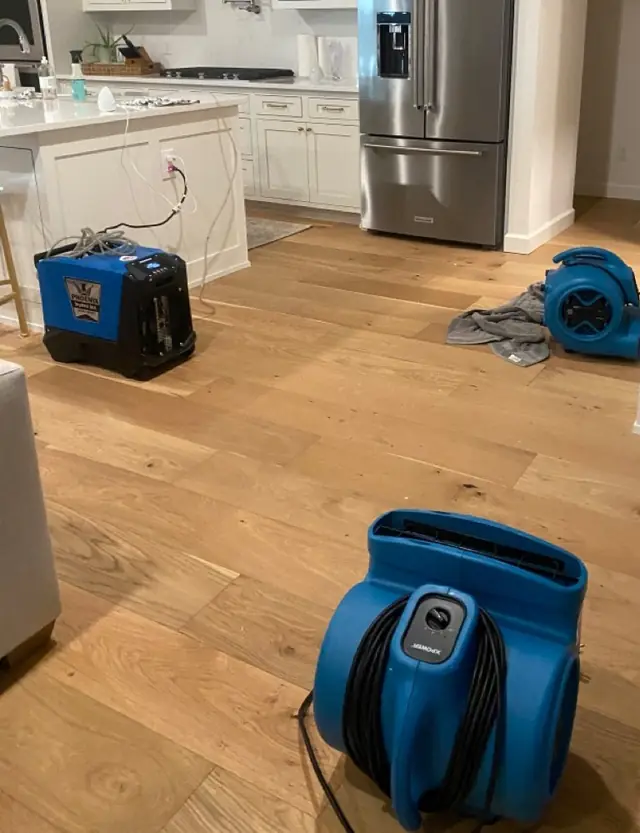
Air movers and a dehumidifier drying a hardwood kitchen floor
Mold Assessment first, then removal
A proper Mold Assessment starts with the moisture, not the mold. Moisture meters and thermal imaging show wet material behind a surface that looks dry, and the findings tell you where the water came from and how far it went. Cleaning one patch of wall without that only clears the symptom.
Removal then follows a set order. The affected area is sealed off so spores do not drift into clean rooms, and filtered air machines scrub the air inside the containment. Materials that cannot be cleaned, such as soaked drywall or insulation, come out. Surfaces that can be saved are cleaned and treated.
The last step is the one people skip. The leak or the humidity that fed the mold has to be repaired, and the area is checked again afterward. If the source is still there, so is the problem.
Chapter 03
Why mold comes back, and what stops it
Mold returns for one reason: the conditions that grew it are still in the house.
A damp basement, a bathroom without a working fan or a roof leak that was never traced will keep feeding the same spot.
Repair is the real prevention. When the source is a roof, the roof has to be repaired. When it is plumbing, that has to be repaired before anything is rebuilt. Iron Shield does both roofing and restoration, so a leak that started in the shingles can be fixed and the rooms it reached cleaned by the same company.
Iron Shield is licensed and insured. Call (479) 337-4766.
Keep it dry
Keep indoor humidity under 60 percent, and repair leaks promptly.
Give bathrooms and kitchens real airflow so moisture leaves the room instead of settling in it. Check attics, basements and crawl spaces on a routine schedule, because those are the places a slow leak hides.
Iron Shield’s prevention advice
Most mold is a roof or a pipe problem that ran long.
A roof leak that is never found drips into the attic and works its way down. Residential roofing is where that repair starts, and water damage mitigation is what dries the rooms it reached. Mold should be dealt with promptly, before the damp material has time to spread the problem.
Questions about mold
How do I know if there is mold in my house?
Musty odors and discoloration on walls or ceilings are the usual signs, most often in basements, bathrooms and behind walls. Mold can also sit out of sight in ceilings and HVAC systems, which is what an assessment is for.
Can mold come back after it has been removed?
Yes, if the leak, the humidity or the poor ventilation behind it has not been fixed. Removal only lasts when the moisture source is repaired as part of the job.
The mold started with a roof leak. Who should I call?
Iron Shield does roofing and restoration, so one call covers both the leak and the cleanup. Estimates are free. Call (479) 337-4766 and describe what you are seeing.