Ridge
Roofing in Springdale and across Northwest Arkansas, from the ridge to the eave
Residential and commercial roofs, from a first inspection to a full replacement. The roof is where the water path starts, so it is where the work starts.
Chapter 01
Where a roof lets water in first
A roof rarely fails in the open field of shingles. Water finds the places where the roof is cut or joined: the boot around a plumbing vent, the step flashing where the roof meets a wall, the valleys where two slopes drain into one, and the first course along the eave.
That is why a roof inspection is mostly a look at edges and penetrations. A field of sound shingles with a cracked pipe boot beside it will still stain the ceiling below.
A flat commercial roof follows the same rule with different parts. There it is the seams, the drains, and the flashing at parapets and rooftop units.
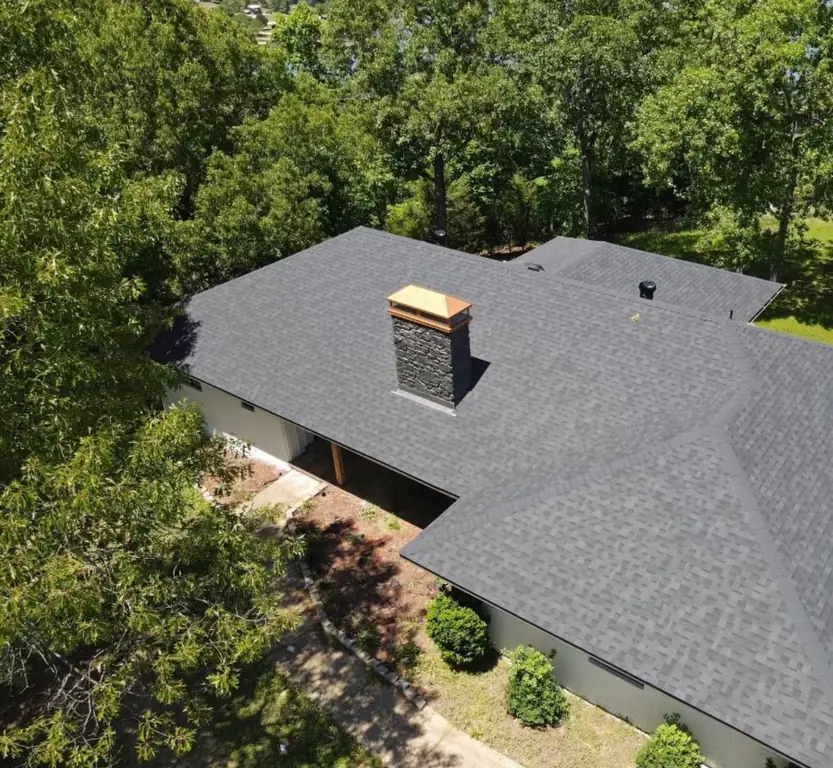
A finished charcoal shingle roof with a copper-capped stone chimney, seen from above
How a roof gets sorted into repair, maintenance or replacement
Iron Shield starts with a free consultation and a roof inspection, then writes a detailed estimate. Those are the first three steps of its six-step process, and the estimate is where the choice between repair and replacement gets made.
Residential and commercial roofs are different problems. A home has a pitched roof in asphalt shingle or metal, and the questions are about the age of the shingles, the flashing and the deck underneath. A commercial building has a low-slope roof in TPO, EPDM, metal, modified bitumen or built-up layers, and the questions are about the condition of the membrane, ponding and drainage.
Repair suits damage that is local. Maintenance suits a roof that is sound but aging. Replacement suits a roof where the damage or the age is everywhere.
Chapter 03
What a finished roof hands down
A roof does not end at the drip edge.
It sheds water to the gutters, the gutters carry it past the siding, and the siding keeps it out of the wall. If any one of them is wrong, the water ends up in the room below.
Iron Shield works on all of it: the roof, the gutters and siding, and the drying-out indoors when water does get in. One contractor sees the whole path, which helps when a leak is not where the stain is.
The company states over 40 years of combined experience in roofing, restoration and disaster damage, and says it is licensed and insured.
Billy Swanson, Google review: “He got us qualified for a replacement roof and gutters.”
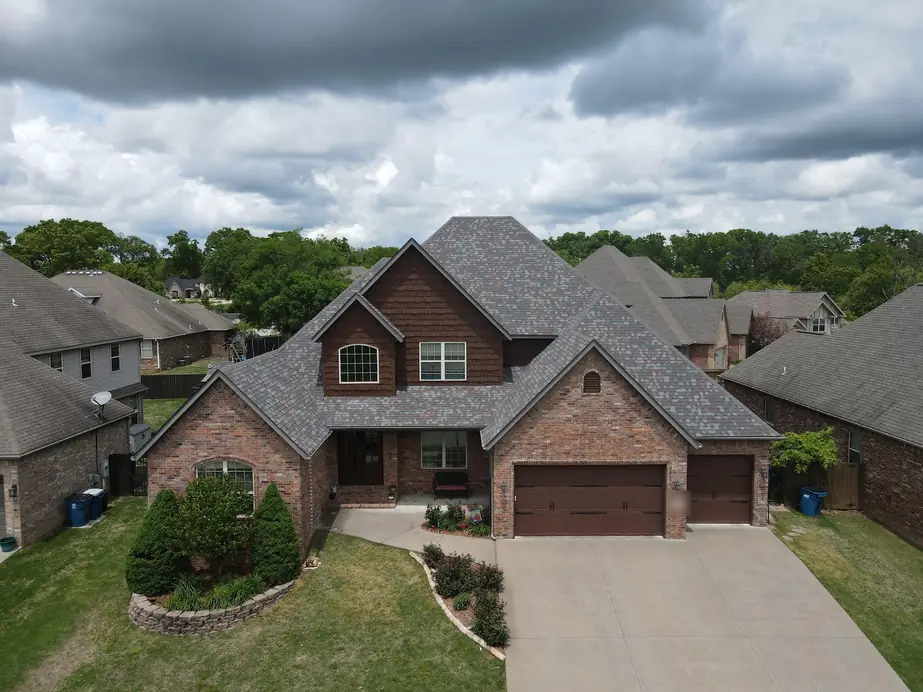 RidgeResidential roofingRoof inspections, repair, replacement and maintenance for homes, on asphalt shingle and metal roofs.See residential roofing
Field
Two kinds of roof
Pitched roofs shed water by slope. Flat roofs hold it until the drains take it away. Pick the one that matches your building.
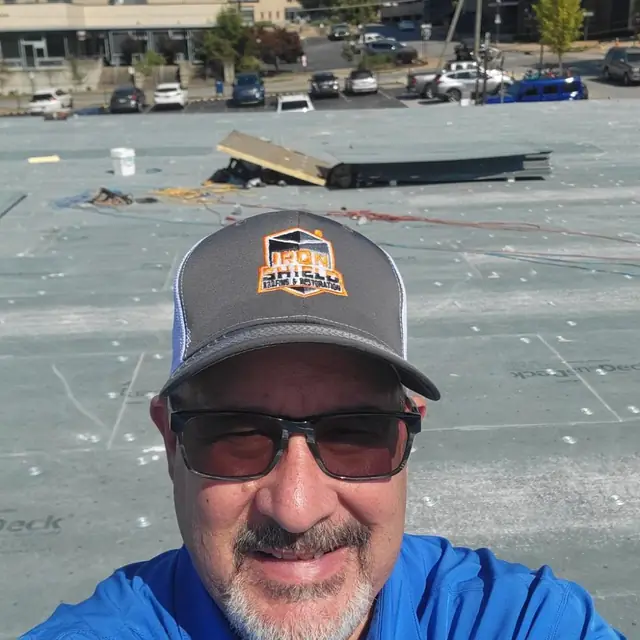 Commercial roofingFlat roof installations, coatings, emergency repairs and maintenance plans for warehouses, retail stores, offices and industrial buildings.See commercial roofing
Roofing questions, answered
How often should a roof be inspected?
At least once a year, and again after any major storm. Commercial flat roofs do better with two inspections a year, in spring and fall. Regular inspections catch small problems before they become leaks.
A storm just damaged my roof. What should I do first?
Make sure everyone is safe, then take photos of the damage and call your insurance company. Call Iron Shield on (479) 337-4766 as well. The team responds to emergencies 24/7 and can board up or cover the opening.
Do you help with the insurance claim?
Yes. Iron Shield can assist with filing an insurance claim after roof damage and has experience working with insurance companies.