Floor
Water Damage Mitigation and Cleanup in Northwest Arkansas
24/7 emergency response for floods, pipe bursts and appliance failures, from the first assessment through drying, cleaning and repair.
Chapter 01
How water travels once it is inside
A puddle on the kitchen floor is the small part of the problem. Water slides under flooring, wicks up the back of drywall, drops into wall cavities and runs along framing until it finds a low point, and that can be a room away from where the pipe let go or the roof leaked.
Flooding from heavy rain, a burst or leaking pipe, a failed dishwasher or water heater, an overflowing tub, a sewer backup and a leak around a roof or window all follow the same rule. What you can see is where the water stopped, not where it went.
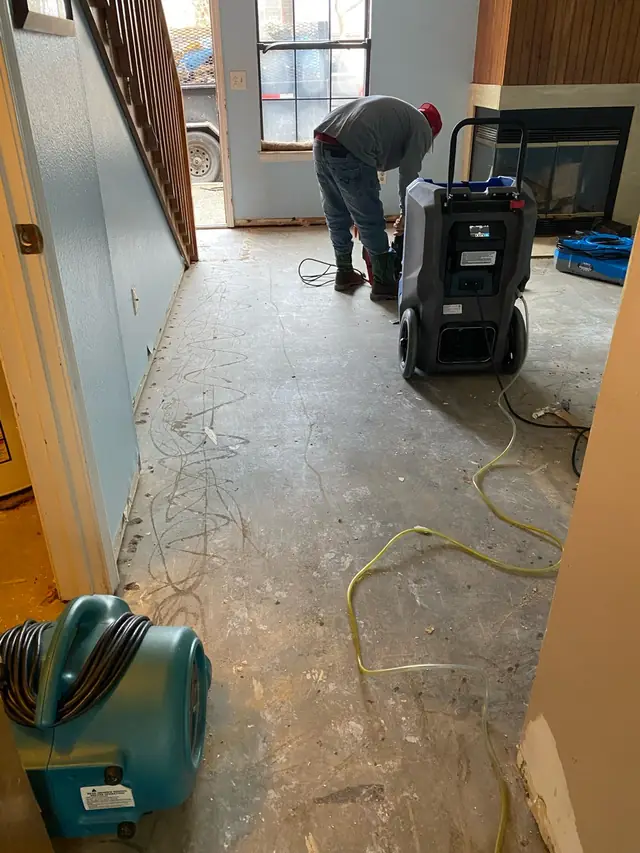
Flooring lifted to the slab with a dehumidifier and an air mover running during a water damage job
Five steps, in the order they have to happen
Iron Shield works through five steps: Emergency Assessment, Water Extraction, Drying & Dehumidification, Cleaning & Sanitizing, and Repair & Restoration. Assessment finds the source and the reach of the water. Extraction pulls out whatever is standing, so the drying equipment is not fighting a flood.
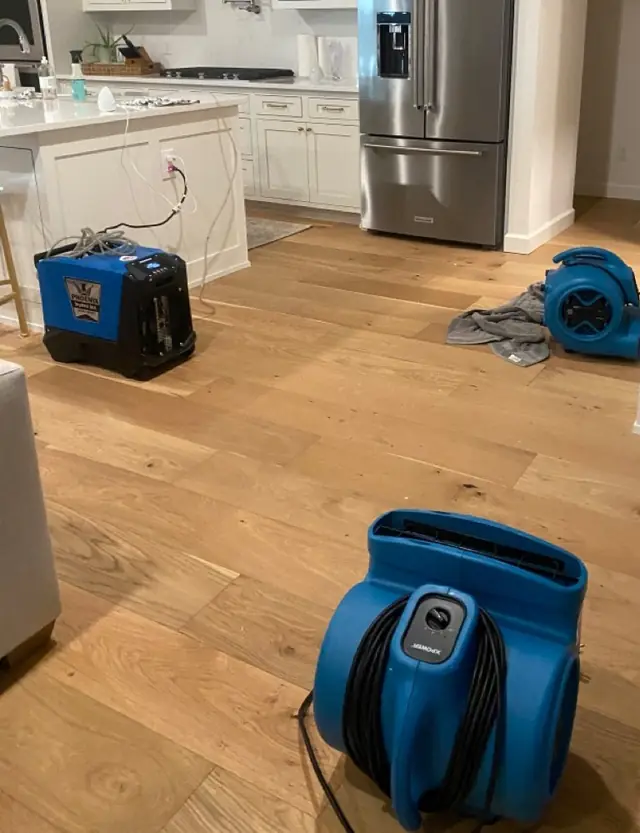
Drying is the step that decides everything after it. Air movers push air across wet surfaces, and a dehumidifier pulls the moisture out of that air so it does not settle back into the walls. When water has soaked in under a floor, boards sometimes have to come up to the slab so the air can reach what is wet.
Cleaning and sanitizing come once the structure is drying, and repair comes last: drywall, paint and flooring put back where they were.
Chapter 03
What dry has to mean before anything is rebuilt
Closing a wall over damp framing only moves the problem out of sight.
Trapped moisture is exactly what mold needs, so a job is not finished when the surfaces feel dry to the hand. The materials behind them have to be dry too.
That is the reason drying equipment runs for days and not for an afternoon. Wet framing and subfloor give up their moisture slowly, and the only honest test is to check that the wood and the drywall have reached normal levels before the repair crew closes anything up.
It is also why the source matters as much as the cleanup. A leak that is still leaking, whether it is a pipe, an appliance line or a flashing detail on the roof above, will undo the drying as fast as it is done.
Iron Shield is licensed and insured. Call (479) 337-4766.
Before help arrives
What you can safely do while you wait.
- Turn off the main water valve if you can reach it.
- Move valuables and electronics to a dry spot.
- Stay off wet carpet and floors.
- Do not use a regular vacuum on standing water.
If the water sat long enough to leave a smell or dark spots, the next call is mold assessment and removal. If it came with smoke or a storm, read about fire and storm damage restoration.
Questions about water damage
How soon should I call after water gets in?
Right away. Water keeps spreading through the structure, and damp materials invite mold. Iron Shield answers emergency calls 24/7 at (479) 337-4766.
Will my insurance cover it?
Many policies cover sudden water damage, such as a burst pipe or a storm leak, but may not cover slow, gradual damage. Check your policy and call your insurer. Iron Shield can help with the claim.
Can my flooring be saved?
Sometimes. Hardwood, laminate and carpet can often be saved with proper drying, while severe damage usually means replacement. An assessment of the wet areas tells you which one you have.