How Weather in Northwest Arkansas Affects Your Roof (Rain, Heat, Hail)
Rain, summer sun and hail each attack a roof in a different way, and knowing the difference tells you what to watch for.
September 30, 2026 · 3 min read
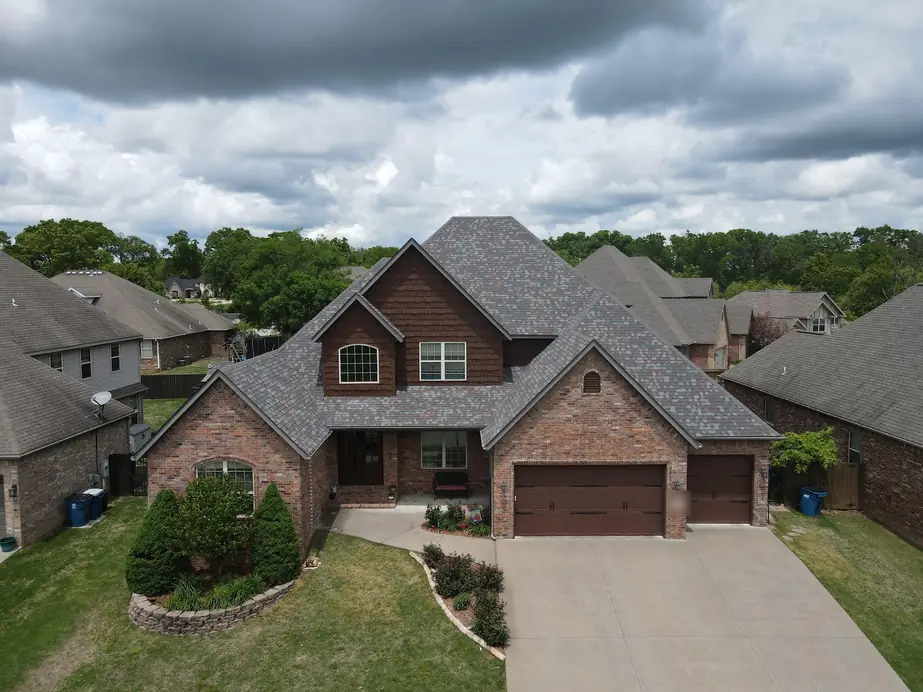
A roof in Northwest Arkansas works through a wide range of conditions. Heavy rain, strong summer sun, sudden temperature swings and the occasional hailstorm all take a turn. None of these is dramatic on its own, but they add up. Each one wears on roofing in a particular way, and understanding those differences helps you spot problems before they become leaks.
How does heavy rain affect a roof?
A roof is designed to shed water, and a sound one does it for years without complaint. Rain exposes whatever is weak. It finds a lifted shingle, a gap in flashing, a failed seal around a vent pipe or a section of decking that has already gone soft. Long, soaking rains are harder than short ones, since water has more time to work its way through a small opening.
Drainage matters as much as the roof surface. Gutters that are packed with leaves send water over the edge and behind the fascia. Valleys that collect debris turn into small dams. On low-slope roofs, standing water leaves the membrane wet for hours after the storm. If you notice brown stains on a ceiling that appear after storms and fade in dry weather, that pattern points to a leak that is not going away on its own.
What does summer heat do to roofing?
Heat is a slow wear factor, and it works from two directions. Direct sun bakes the surface, drying out the oils in asphalt shingles and encouraging them to curl, crack and shed granules. From below, an attic without enough ventilation traps heat and moisture, which cooks the underside of the deck and can shorten the working life of the roofing above it.
There is also the daily cycle. A roof that is hot in the afternoon and cool at night expands and contracts over and over, and that movement loosens fasteners and stresses seams and sealant. The signs are gradual: shingles that look faded and brittle, granules collecting in gutters, or a ceiling upstairs that feels warm in the evening. Good intake and exhaust ventilation is the best defense the roof has against all of it.
What does hail do, and how do you know if your roof was hit?
Hail does its damage in an instant, and it is not always obvious from the driveway. On shingles it can bruise the mat beneath the granules, knock granules loose in a scattered pattern and, in a severe storm, crack or puncture the shingle. On metal it can dent panels. On flat roofs it can bruise or puncture the membrane. A bruised shingle may look nearly normal and still leak months later.
After a storm, check what you can from the ground. Look for dents in gutters, downspouts, window screens and the metal caps on vents, since those show which way and how hard the hail struck. Look at the yard for granules washed down from the roof. Then have a roofer inspect it. Damage is easy to miss, and a professional can document it properly. Wind can leave its own signs, such as shingles lifted, creased or gone missing along ridges and edges.
If you file an insurance claim, photographs and a roofer’s written findings help. Coverage depends on your policy, and the insurer makes the decision, but a clear record of what the storm did makes the conversation easier.
How can you protect your roof from the weather?
- Have the roof inspected on a regular schedule and after any hail or high-wind storm, not only when something leaks.
- Keep gutters and downspouts clear so water leaves the roof edge and the foundation.
- Trim branches that hang over the roof, since they scrape shingles in the wind and drop limbs in storms.
- Make sure the attic has working intake and exhaust ventilation and that insulation is not blocking the vents.
- Repair curled, cracked or missing shingles and worn flashing promptly, before the next storm.
- Never climb onto the roof to check it yourself. Use binoculars from the ground, and look from the attic.
When should you call for help after a storm?
Call when you see missing or lifted shingles, dents on metal, granules washing off in quantity, or a stain that has just appeared on a ceiling. Do not wait for a second storm to prove the first one did damage. Water that gets through a small opening will keep coming back to it.
Iron Shield inspects and repairs roofs across Northwest Arkansas, offers 24/7 emergency response, and helps with insurance claims. Call (479) 337-4766. Estimates are free, and Iron Shield is licensed and insured.
Iron Shield Roofing & Restoration, (479) 337-4766
Call (479) 337-4766More articles
How to Inspect Your Roof for Winter Damage
You can spot most winter roof damage without leaving the ground, if you know what to look for and where.
Step-by-Step Guide to Preventing Ice Dams on Your Roof
Most ice dams trace back to heat escaping into the attic, which means the best fixes happen inside the house.