Step-by-Step Guide to Preventing Ice Dams on Your Roof
Most ice dams trace back to heat escaping into the attic, which means the best fixes happen inside the house.
September 30, 2026 · 4 min read
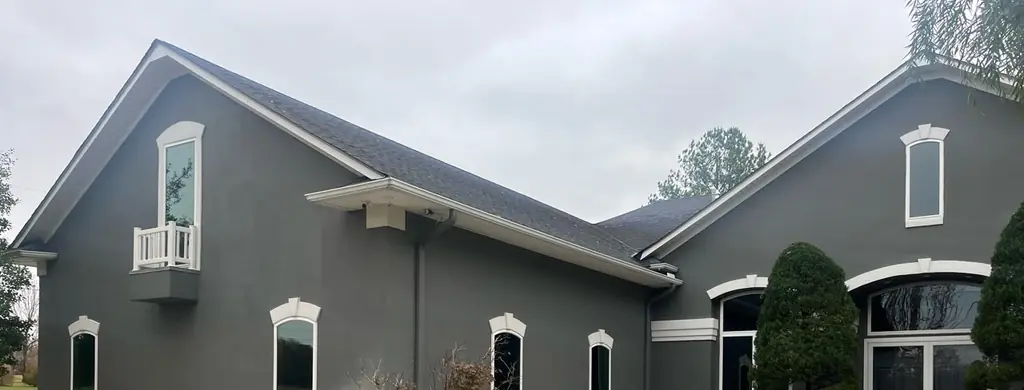
An ice dam is a ridge of ice that builds up along the lower edge of a roof and traps meltwater behind it. It looks harmless, even decorative, until that trapped water backs up under the shingles and shows up as a stain on a ceiling. The good news is that ice dams come from a handful of causes you can address well before the first cold snap. They are not a yearly event in Northwest Arkansas, but a snowfall followed by a hard freeze can produce one.
What is an ice dam and why does it form?
Heat escaping from the house warms the upper part of the roof deck and melts the snow lying on it. That water runs down the slope until it reaches the eave, which sits past the warm wall line and stays at outdoor temperature. There the water refreezes. As more meltwater arrives, the ice ridge grows, and the water behind it has nowhere to go but sideways and upward, under the shingles. Shingles are built to shed water running downhill, not water pushed uphill from behind.
So the root cause is nearly always heat loss into the attic, with cold weather as the trigger. That is why the best prevention happens inside the house rather than on the roof.
Why does the attic matter most?
A cold, dry, well-ventilated attic keeps the roof deck close to the outdoor temperature, so snow melts only when the weather does. Three things work together to get you there. Insulation slows heat moving up from the living space. Air sealing stops warm air from leaking through gaps. Ventilation moves cold air along the underside of the roof deck to carry away whatever heat and moisture get through. A practical order of work looks like this:
- Seal gaps where warm air leaks upward, including around recessed lights, the attic hatch, plumbing and wiring penetrations, and the tops of interior walls
- Check that insulation is spread evenly across the attic floor with no thin or bare spots, and that it does not block the vents at the eaves
- Make sure bath fans and dryer vents exhaust outdoors and not into the attic
- Confirm that soffit vents are open and that ridge or other exhaust vents are in place, since air needs a way in and a way out
- Ask a roofer or insulation contractor to look at the attic if you see frost, damp insulation or uneven snow melt on the roof
Uneven melting is a useful clue you can read from the yard. If snow disappears in patches on a cold day while neighboring sections stay covered, heat is likely escaping under the bare spots.
Can gutters and heat cables help?
Clean gutters give meltwater a path off the roof, so clear leaves and debris in the fall while the weather is dry. Have the work done by a professional if you are not comfortable on a ladder. A gutter packed with debris holds water that freezes into a solid block, and that ice can pull the gutter loose or feed an ice dam at the eave.
Heat cables are electric cables laid along the roof edge to keep a channel open so water can drain. They can help in a known trouble spot, but they treat the symptom and not the cause, and they need to be installed correctly on both the roof surface and the gutters. Hire a qualified installer and follow the manufacturer’s instructions rather than improvising. Fixing the attic heat loss should still come first.
What can you safely do when snow is on the roof?
Stay off the roof. Snow hides ice, and a slope that is slick in the morning does not get safer by afternoon. If you own a long-handled roof rake, you can pull snow down from the lowest few feet of the roof while standing on the ground, well clear of where it lands and away from power lines. Pull gently so you do not scrape granules off the shingles or lift their edges. If the roof is steep, the snow is deep, or the eave is out of reach, leave it and call a roofer.
If water is already coming through a ceiling, set a bucket under the drip, move furniture and belongings out of the way, and take photographs. Then call for help. A leak that is contained early costs far less to repair than one that soaks insulation and drywall for a week.
What should you avoid when ice forms?
- Chipping at the ice with a hammer, axe or shovel, which cracks shingles and can pierce the roof surface
- Spreading rock salt on the roof, which can stain and corrode metal and harm plants below
- Climbing onto the roof or leaning a ladder against an icy edge
- Pouring hot water on the ice, which can refreeze and adds weight
- Ignoring a small stain because it dried out, since it usually returns with the next thaw
Do not assume a dam only matters if it leaks, either. Ice is heavy, and it pulls on gutters and roof edges long before water finds a way inside.
When should you call Iron Shield?
Call Iron Shield at (479) 337-4766 if an ice dam has formed, water is coming through a ceiling, or you want your roof and attic looked over before the next cold spell. Estimates are free, emergency calls are answered around the clock, and Iron Shield is licensed and insured, working from its Springdale office across Northwest Arkansas.
Iron Shield Roofing & Restoration, (479) 337-4766
Call (479) 337-4766More articles
How to Inspect Your Roof for Winter Damage
You can spot most winter roof damage without leaving the ground, if you know what to look for and where.
How Cold Weather Affects Your Roof: What Every Homeowner Should Know
Cold rarely wrecks a roof in one night, but it wears on shingles, seams and flashing all season long.