Residential Roofing Options in NWA (Metal, Shingle, Tile, Flat Roofs)
Each roofing material has strengths and trade-offs, and the right one depends on your home, your weather and your plans.
September 30, 2026 · 3 min read
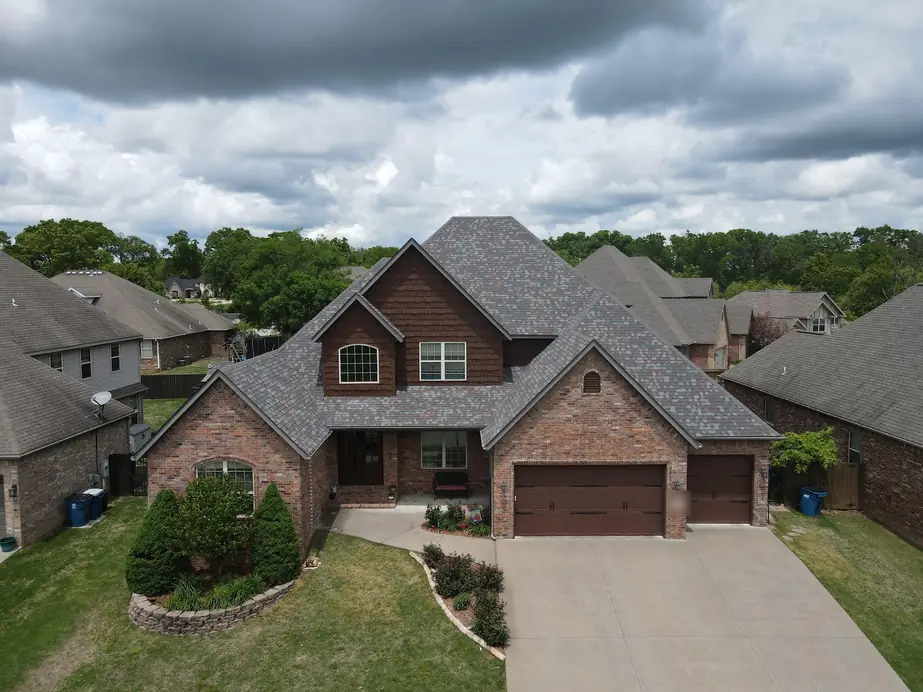
Picking a roofing material is a decision you live with every day, even if you rarely look up at it. The choice affects how your house handles a storm, how it looks from the street, how much upkeep it needs and how the attic behaves through the seasons. Here is a plain comparison of the main options a Northwest Arkansas homeowner might weigh, including which ones are common on houses in the region.
Why is asphalt shingle so common on local homes?
Asphalt shingles dominate residential roofing across the country, and Northwest Arkansas is no exception. They are made in a wide range of colors and profiles, they suit most roof shapes, and nearly every roofer knows how to install them. Repairs are straightforward too: a damaged section can be replaced without touching the whole roof.
Architectural shingles, the thicker layered style, add depth and a more dimensional look than flat three-tab designs. They also tend to handle wind better because of the added mass. The trade-off is that shingles are a surface material, so they respond to hail, heat and age more visibly than some alternatives. Granule loss, curling and cracking are the usual signals that a shingle roof is tiring.
When does metal roofing make sense?
Metal roofing has become a popular pick for homeowners who want a long-service roof with a distinct look. Panels shed rain and debris quickly, resist fire, and hold up well against high winds when they are fastened correctly. Standing seam panels hide the fasteners and give a clean, modern line, while exposed fastener panels are a simpler and more familiar style.
There are things to weigh. Metal can be louder in a downpour unless the deck and attic are set up to dampen sound, and hail can dent thinner panels. Installation calls for careful detailing at valleys, penetrations and edges, and the panels must be allowed to expand and contract with temperature. A metal roof is only as good as the crew that puts it on.
What about tile and slate?
Clay and concrete tile are more familiar in dry, warm regions, but they appear on some custom homes elsewhere. Tile is heavy, which means the roof framing must be evaluated to confirm it can carry the load, and it needs installers with specific training. It is also brittle underfoot, so anyone walking on the roof for repairs can crack pieces. Slate shares many of those traits.
For most ordinary houses in this area, tile requires structural changes and a specialist contractor, which is why it is uncommon. If you love the look, ask whether a shingle or metal profile can imitate it at a fraction of the weight. Iron Shield’s residential roofing pages name asphalt shingles and metal, so if tile is your goal, ask about it before you assume it is on the list.
Are flat and low-slope roofs an option for a house?
Flat roofs are rarely truly flat. They have a slight pitch to move water toward a drain or edge, and they use membranes such as TPO, EPDM or modified bitumen instead of shingles. They are common on commercial buildings and appear on some modern homes, porches, additions and garages.
The demands are different from a pitched roof. Water lingers longer on a low slope, so seams, drains and flashing details carry more of the burden, and small failures show up as ceiling stains quickly. Regular inspection matters more with this style. Standard shingles should never be installed on a slope too shallow for them, because water can back up under the courses.
How do you choose the right roof for your home?
- Roof pitch and shape: steep, complex roofs suit shingles and metal, while low slopes need a membrane system
- Weather exposure: consider hail, wind, heavy rain and the trees around your house
- Structure: some materials need the framing to carry extra weight
- Appearance: check the color and profile against your siding, brick and neighborhood
- Upkeep: think about how much attention you want to give the roof over the years
- Plans: how long you expect to stay in the home
Ask to see samples in daylight against your house, since color looks different on a small board in a showroom than across a full roof. Also ask any roofer how the material handles the specific weak points of your roof, such as valleys, chimneys and dormers.
To talk through asphalt shingle or metal for your house, call Iron Shield at (479) 337-4766. Estimates are free.
Iron Shield Roofing & Restoration, (479) 337-4766
Call (479) 337-4766More articles
How to Inspect Your Roof for Winter Damage
You can spot most winter roof damage without leaving the ground, if you know what to look for and where.
Step-by-Step Guide to Preventing Ice Dams on Your Roof
Most ice dams trace back to heat escaping into the attic, which means the best fixes happen inside the house.